
Device Detection

Monday, October 16, 2017 1:00:00 PM
Sitecore boosts Device Detection with 51Degrees
Formal partnership agreement announcing 51Degrees as Sitecore's embedded device detection provider
Sitecore is delighted to announce its formal partnership agreement with 51Degrees. 51Degrees will be Sitecore's Device Detection service provider. Sitecore is a leader for eight years running in the Gartner Magic Quadrant for web content management. 51Degrees already provides Device Intelligence to over 1.5 million websites worldwide.
Monday, October 16, 2017 10:00:00 AM
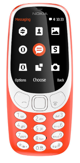
51Degrees Uses Secondary HTTP Headers to Detect The New Nokia 3310
We check out the re-release of an old favourite feature phone and share how we detect the User-Agents.
We check out the re-release of an old favourite feature phone and test the device detection results. The new Nokia 3310 does not have a standard User-Agent compared to the majority of mobile devices we detect. The User-Agent for the Nokia 3310 comes as part of the HTTP header produced by Opera Mini, which is the pre-installed data-saving browser for this device.

Wednesday, October 11, 2017 12:23:00 PM
DeviceAtlas vs 51Degrees Device Detection
Algorithms, performance and accuracy explained
This essential blog compares the approach used by 51Degrees and DeviceAtlas. It describes the high-level operation of each product, areas of difference and associated intellectual property. In simple terms, it will help readers match products to common use cases and formulate tests for evaluation.

Monday, October 2, 2017 9:00:00 AM
51Degrees: More Than Three Times Faster!
51Degrees compares performance of our enhanced algorithm on three different commodity hardware platforms.
51Degrees is regularly evaluated against competitors DeviceAtlas and WURFL from ScientiaMobile for performance, accuracy and memory consumption. This blog post builds on the previous performance blog from 2016 with the same commodity hardware; 1) a Raspberry Pi, 2) a low-end desktop PC and 3) a high-end multi CPU server, but using an all new algorithm.

Wednesday, September 20, 2017 8:30:00 AM
Website Optimisation for Apple devices - iPad and iPhone
51Degrees shares updated JavaScript to enable device detection for Apple devices
In 2015 we released a detailed blog on Device Detection for Apple iPhone and iPad. Since then Apple has released many more devices. Identifying Apple devices can be challenging and when putting plans in place to optimise websites for mobile devices like Apple, companies have two choices. Try and run a solution internally or simply have 51Degrees do the work for you with the added benefits of the Apple device properties we provide in our data files.
Because we endeavour to support companies and hobbyists with our unique open source solutions, we are sharing some JavaScript that will enable you to set up an internal solution if you wish. We would, however, encourage you to save yourself the time and effort and use our data files to support your strategic website optimisation decisions.

Monday, August 21, 2017 1:33:00 PM
How to Use the New Hash Trie algorithm in Java
51Degrees explains how to call the C Hash Trie API within Java.
This article shows how the new, faster, Hash Trie algorithm can be used in a Java environment. This blog will go through the steps required to create an illustrative example of how to call the C Hash Trie API within Java. Before starting, you will need to get hold of the new Hash Trie source which is available on GitHub.

Thursday, August 17, 2017 1:00:00 PM
Samsung Internet Usage
51Degrees reviews the Samsung browser popularity
In 2012 Samsung Internet was made available as a stand-alone app and since then it has begun to acquire momentum, particularly in Africa and the Middle East. It has become so well recognised in these regions that its usage topped Mobile Safari. The latest stable release adds features such as Iris Scanning, Samsung Pay Support and Content Blocking. We take a look at the Samsung browser popularity around the globe and how it compares to other android browsers.

Thursday, July 6, 2017 2:07:00 PM
51Degrees Detects User-Agents For New OnePlus 5 Smartphone
OnePlus 5 was launched on 27th June 2017
OnePlus is a Chinese smartphone manufacturer, founded in December 2013. Their latest flagship, OnePlus 5, was launched on 27th June 2017. This blog shares a User-Agent example detected by 51Degrees Intelligence Solution.

Monday, July 3, 2017 2:30:00 PM
51Degrees Github Repository Housekeeping – Important Update
Reducing repository size to improve performance
51Degrees will be switching to using Git LFS to store our data files.

Tuesday, June 27, 2017 12:16:00 PM
Website Health Check Tips
What is slowing down your website on mobile devices?
Slow page loading or latency is a common challenge for websites when viewed on mobile devices. Ads may also not appear affecting viewability, revenue income from advertisers and publisher brand safety. This blog gives you some useful tips to establish what is causing the problem.